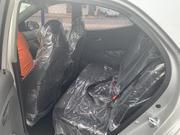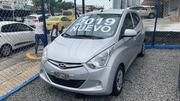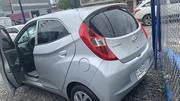
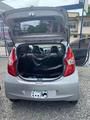
Hyundai i10 • 2019 • 3,400 km

Published 08/09/2019
|
Califica este vehículo

Hyundai i10 • 2019 • 3,400 km

Cash
B/. 8,600 PAB
Panama, Panamá

Vehicle Details

Condition
Used
Manufacturer
Hyundai
Model
i10
Year
2019
Car body style
Sedan
Transmission
Manual
Mileage
3400 km
cylinders
3 cylinders
Traction type
4X2

Description

{# Visible FAQ block. Renders the same {q, a} entries emitted as FAQPage JSON-LD by base.html. Google requires every Q+A in the schema to be visible in rendered HTML, so this partial MUST run on any template that ships `faqs` in context. The synthesizer that produces `faqs` (seo/faqs.py:get_faqs_for_kind) already does i18n branching, so the prose here is already in the active language. #}

Frequently asked questions

This 2019 Hyundai i10 is in the 3-7 year sweet spot — past the steepest depreciation, modern enough to share parts with current generations, usually still serviceable through manufacturer-recommended schedules. Most Hyundais in this range hold value well if service history is documented.

This listing is below the typical mileage band for a 2019 Hyundai — most i10s of this age show closer to 15-20k km/year. Low mileage is a price-supporting attribute but verify the odometer hasn't been rolled back (check service records and inspection-station logs in Panama).

Panamá, Panama is a smaller market — comparable Hyundai i10 listings are scarce, so this sedan can carry a small premium for buyers who can't find local alternatives. Be transparent about condition; buyers who travel for a listing typically expect what they see in the photos.

A low-kilometer 2019 Hyundai i10 carries its own checklist: low-use vehicles can develop dry-rot in seals, brake-disc surface rust, fuel-stabilizer concerns if it sat for long stretches, and battery degradation. Verify the odometer against service stamps and inspection logs in Panama — low-km history is also a common odometer-fraud target.

Insurance in Panama is a private-carrier market. For a mid-tier Hyundai i10 in Panama, expect 4-8% of the market value per year for full coverage. The biggest cost-driver is the city — Panamá rates can be meaningfully higher than rural Panama for the same Hyundai.

Gasoline pricing in Panama is moderate. For this i10, expect monthly fuel cost to scale roughly with kilometers driven and the manufacturer-rated economy minus 10-15% for real-world conditions.

This is a private-seller listing. For a mid-tier purchase like this Hyundai i10, the buyer usually pre-arranges financing with their own bank or credit union — get pre-approval before contacting the seller. The seller will typically wait for funds to clear before signing over the title.

In Panama, Panama, you'll need the local title-equivalent paperwork, the seller's ID, and proof of any annual road-tax or circulation-permit payment. Verify the exact requirements with Panama's transit authority before listing day — they vary by province / state.

This is a private-seller listing — an individual selling their own Hyundai i10, not a business. Treat it like any other person-to-person purchase: meet in a safe public location (a police-station parking lot is the gold standard), verify the seller's ID against the title before any money changes hands, and never wire funds before seeing the vehicle in person.

Low kilometers for a Hyundai i10 of this year preserves resale value meaningfully — buyers in Panama actively search by mileage filter. Each thousand kilometers added to the odometer between now and a future sale shaves a small but measurable amount off the next asking price.

On a mid-tier listing in a smaller market like Panamá, Panama, sellers often hold firmer on price because comparable Hyundai i10s are scarce. Lead with your timing (ready-to-buy) and your willingness to handle transfer paperwork — a frictionless transaction is sometimes worth a few percent to the seller.

If the seller still owes a bank or finance company against this Hyundai i10, the title has a lien recorded. Do NOT hand over funds before the lien is released. Standard practice in Panama: buyer's bank pays the lender directly for the loan balance and pays the seller for the remainder, with the lender's release letter arriving alongside the new title. Verify the lien status through whatever public registry Panama uses (DMV / DETRAN / Registro Civil / etc.) before agreeing to a purchase price.