{# Vehicle (Car) Schema for this listing — extends Product, so Product consumers (Bing, AI Overview) still understand offers/brand/image. #}

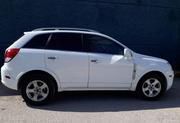
Chevrolet Captiva • 2011 • 126,000 km

Published 10/09/2019
|
Califica este vehículo

Chevrolet Captiva • 2011 • 126,000 km

Cash
$ 105,000 MXN
Yucatan, Mérida

Vehicle Details

Condition
Used
Manufacturer
Chevrolet
Model
Captiva
Year
2011
Transmission
Automatic
Mileage
126000 km
cylinders
6 cylinders
Traction type
4X4
Fuel type
Electric

Description

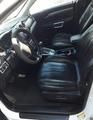
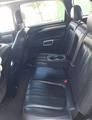
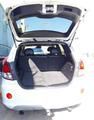
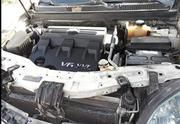
Captiva sport 2011 asientis de piel , automatica, vidriosy seguros electricos, quemacocos, bolsas de aire frontales y laterales, stereoAm/Fm Cd, Aux. Posiciones en el volante y asiento,llantas 90%de vida, motor y caja al 100,impecable. Informes 9994400848.
{# Per-vehicle FAQ block — 12 FAQs branched on this listing's attrs. Must render visibly (Google requires Q+A pairs in FAQPage JSON-LD to also exist in the rendered HTML). See ~/seo/playbook/02. #} {# Visible FAQ block. Renders the same {q, a} entries emitted as FAQPage JSON-LD by base.html. Google requires every Q+A in the schema to be visible in rendered HTML, so this partial MUST run on any template that ships `faqs` in context. The synthesizer that produces `faqs` (seo/faqs.py:get_faqs_for_kind) already does i18n branching, so the prose here is already in the active language. #}

Frequently asked questions

This 2011 Chevrolet Captiva is 8-15 years old — value-priced daily-driver territory. Mechanical condition matters far more than cosmetics at this age. Ask for the most recent timing-belt/chain interval, suspension work, and any major repairs. A documented one-owner Captiva in this range is a stronger buy than a higher-trim with unknown history.

This listing falls in the typical mileage band for a 2011 Chevrolet Captiva (around 15-20k km/year). At average usage, expect normal-wear consumables to need attention — brakes, tires, fluids — but no major-component surprises if the service interval has been followed.

Mérida, Yucatan has one of the deeper Mexico markets for cars. Comparable Chevrolet Captiva listings here usually number in the dozens, so buyers can be picky. Price competitively, photograph thoroughly, and respond to messages within a few hours — listings that don't get fast replies fall out of saved-search results in this market.

For this electric Chevrolet Captiva, the single biggest item is battery health — ask for a recent capacity report (most EVs expose it through the infotainment system) and check for any open battery-pack warranty. Also inspect charging-port condition, regen-brake feel, and the 12V auxiliary battery (often overlooked but a common roadside-failure cause on older EVs).

Insurance in Mexico is a private-carrier market. For a premium-tier Chevrolet Captiva in Yucatan, expect 4-8% of the market value per year for full coverage. The biggest cost-driver is the city — Mérida rates can be meaningfully higher than rural Yucatan for the same Chevrolet.

Energy cost for this electric Captiva depends on whether you charge at home (cheapest) or at public DC fast-chargers (most expensive). In Mexico, residential rates typically work out to a small fraction of the per-km cost of a gasoline equivalent. Public fast-charging can erase that advantage on long road trips — calculate by route.

This is a private-seller listing. For a premium-tier purchase like this Chevrolet Captiva, the buyer usually pre-arranges financing with their own bank or credit union — get pre-approval before contacting the seller. The seller will typically wait for funds to clear before signing over the title.

In Yucatan, Mexico, you'll need the factura (original sales invoice), the most recent tenencia / refrendo receipt, the predial-update letter for the seller's address, a clean credit-bureau check, and the seller's ID. Tenencia transfers vary by state — Mexico City and CDMX-suburbs charge differently.

This is a private-seller listing — an individual selling their own Chevrolet Captiva, not a business. Treat it like any other person-to-person purchase: meet in a safe public location (a police-station parking lot is the gold standard), verify the seller's ID against the title before any money changes hands, and never wire funds before seeing the vehicle in person.

EVs depreciate faster than equivalent ICE vehicles in their first 3-4 years (battery-tech advances make older models less attractive) but then plateau as the used-EV market matures. For this Chevrolet Captiva, expect the next 12 months to mirror the broader EV depreciation curve in Mexico more than any model-specific story.

On a premium-tier listing, negotiation room varies more by the seller's hold-time than by buyer pressure. Ask when the listing went live — anything past 30 days usually means the seller is open to a 7-10% reduction. Also inspect service records: missing entries are a legitimate price-reduction lever.

If the seller still owes a bank or finance company against this Chevrolet Captiva, the title has a lien recorded. Do NOT hand over funds before the lien is released. Standard practice in Mexico: buyer's bank pays the lender directly for the loan balance and pays the seller for the remainder, with the lender's release letter arriving alongside the new title. Verify the lien status through whatever public registry Mexico uses (DMV / DETRAN / Registro Civil / etc.) before agreeing to a purchase price.